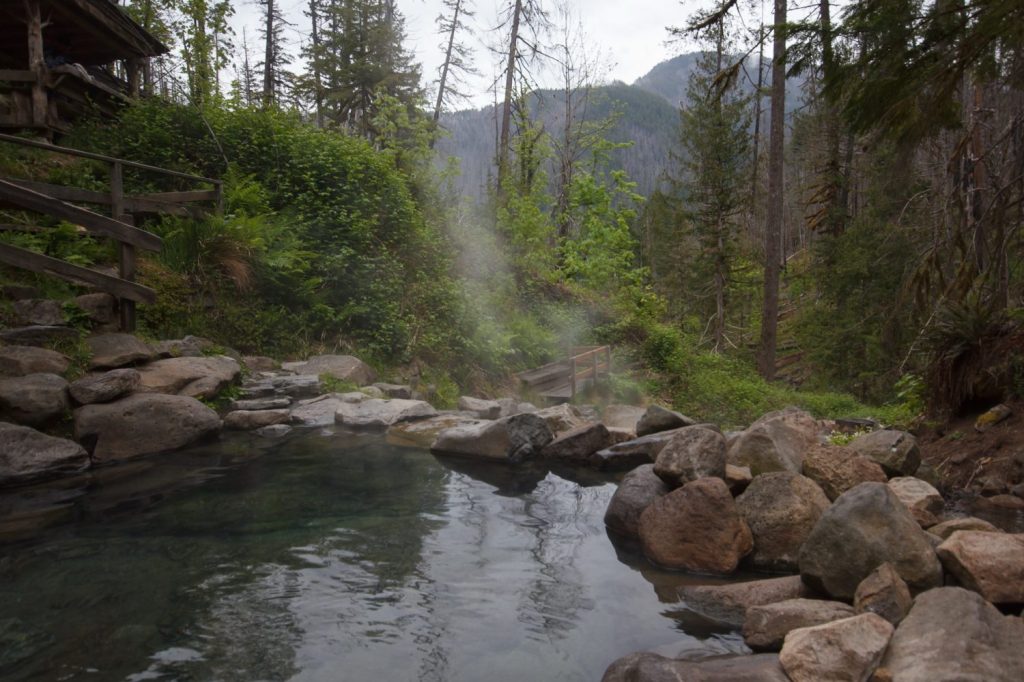
What Makes This Forest Hot Spring So Special
Tucked into the heart of Oregon’s Willamette National Forest, Cougar Hot Springs (also called Terwilliger Hot Springs) is a tranquil, clothing-optional soak surrounded by mossy rocks, flowing creeks, and towering evergreens. It’s the kind of place that feels secret, even if it’s well loved by locals and travellers alike. If you’re road-tripping through Oregon or simply searching for your next hot spring adventure, this guide covers everything you need to plan a peaceful visit, including how to get there, when to go, what to bring, and how to soak respectfully.
How to Get to Cougar Hot Springs: Directions and Tips
Cougar Hot Springs is located just off Forest Service Road 19 (also known as Aufderheide Drive), a scenic byway that winds through the Cascade Mountains. The springs are about an hour and a half from Eugene, Oregon, making them an easy day trip if you’re coming from the city.
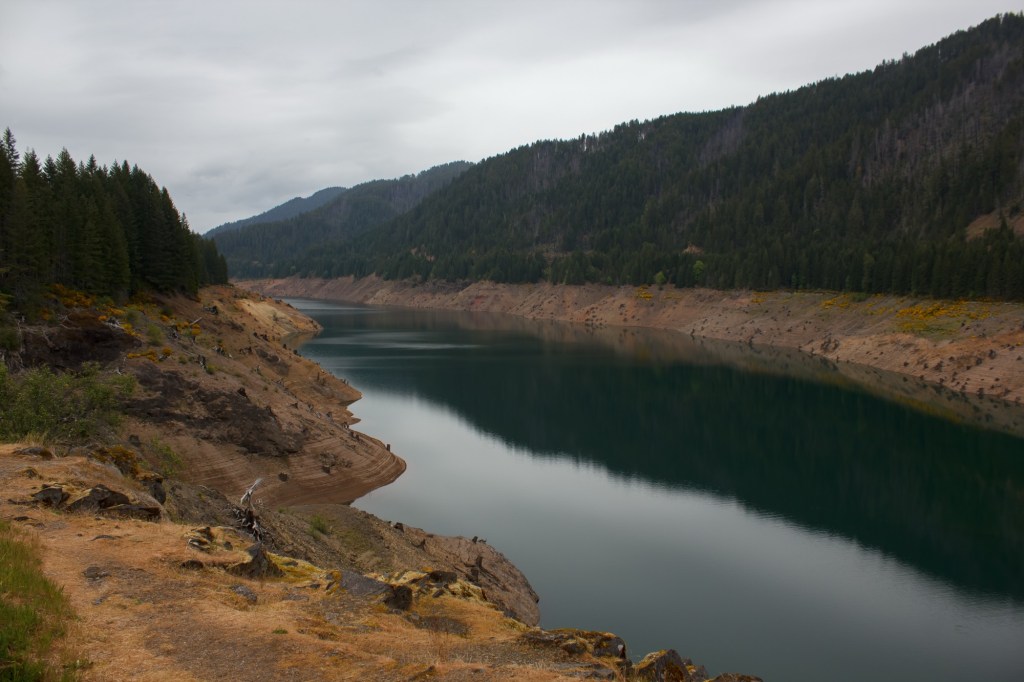
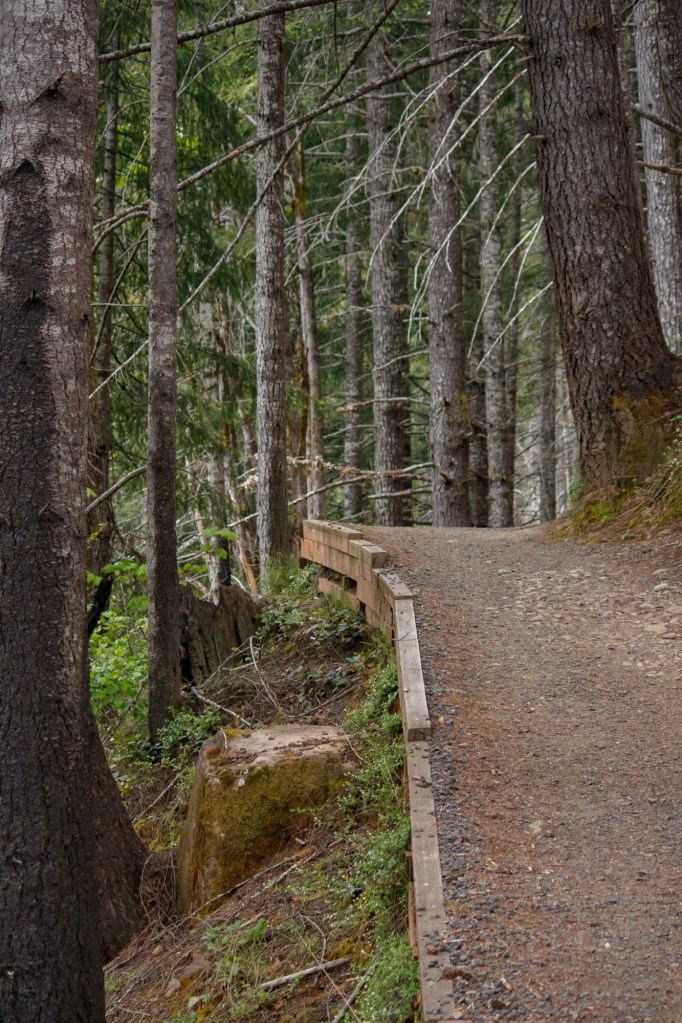
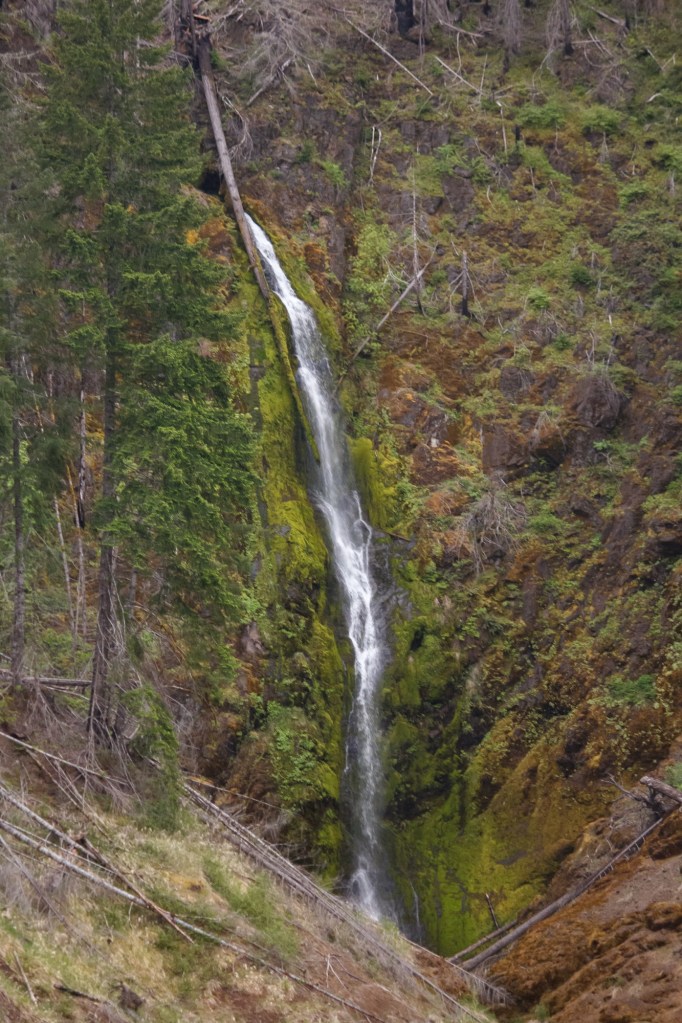
Once you arrive at the small day-use parking area, which overlooks Cougar Reservoir, the springs are a short 400 meter (1/4 mile) walk from the trailhead along Rider Creek Trail #3319. The trail is well maintained but can be muddy in the wetter months. It’s a gentle walk through dense forest, and as you get closer, the smell of sulfur and rising steam let you know you’re almost there.
The Lush Willamette Forest and the Invasive Intruder Surrounding the Springs
Cougar Hot Springs is nestled within the Willamette National Forest, surrounded by towering Douglas firs, western redcedar, and lush understory plants like ferns and mosses that thrive in Oregon’s wet climate. The area is a classic example of Pacific Northwest temperate rainforest, rich in texture and scent.
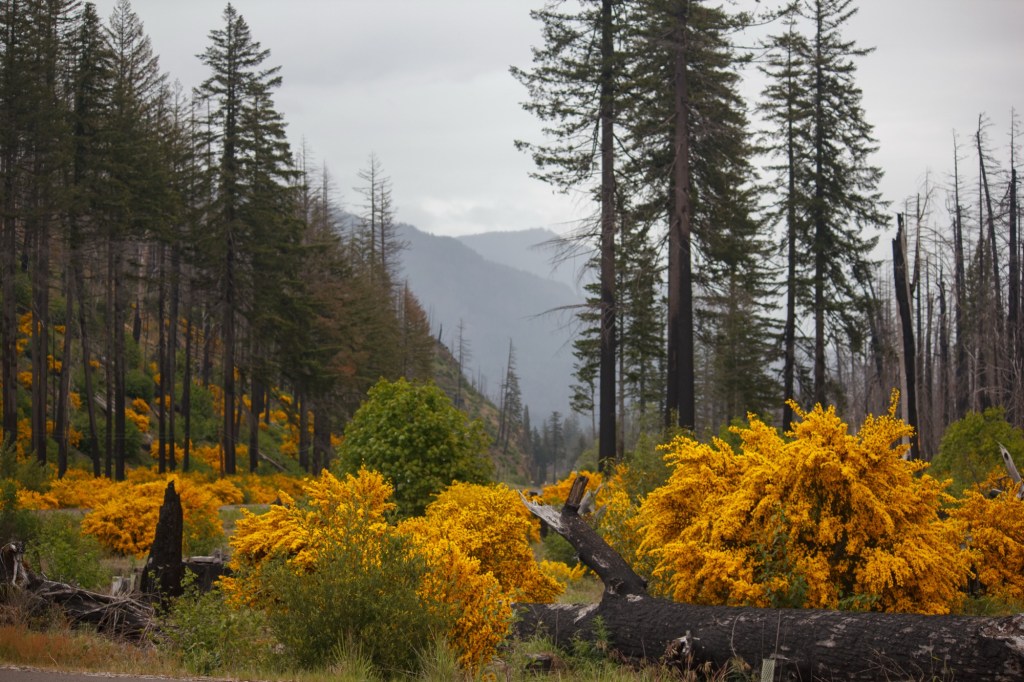
But among the native greenery, there’s a less welcome visitor: Scotch broom. With its bright yellow flowers, this invasive plant may seem pretty at a glance, but it outcompetes native species and spreads aggressively, especially in areas recovering from fire or disturbance.
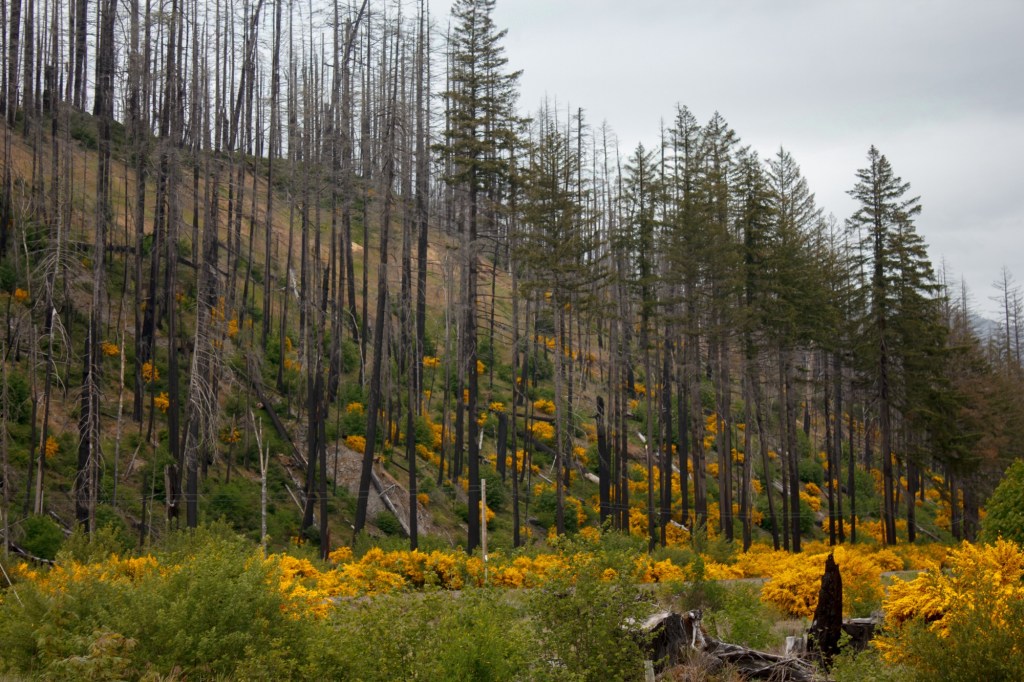
It thrives along roadsides and open patches near trailheads, and once established, it’s very difficult to remove. Keep an eye out for it… just don’t help it spread by brushing up against it during seed season, which typically runs from late May through July. That’s when the seed pods dry out and burst, flinging seeds several feet away. Even a small disturbance can unintentionally contribute to its spread.
Exploring the Natural Hot Pools
The soaking area consists of a series of four natural pools, cascading down a hillside like a forest staircase. The pools are built up with stone walls, forming shallow basins that range in size from about 3 to 12 feet across. Depths vary, but they’re typically 2 to 3 feet deep, enough to sit in comfortably while soaking.
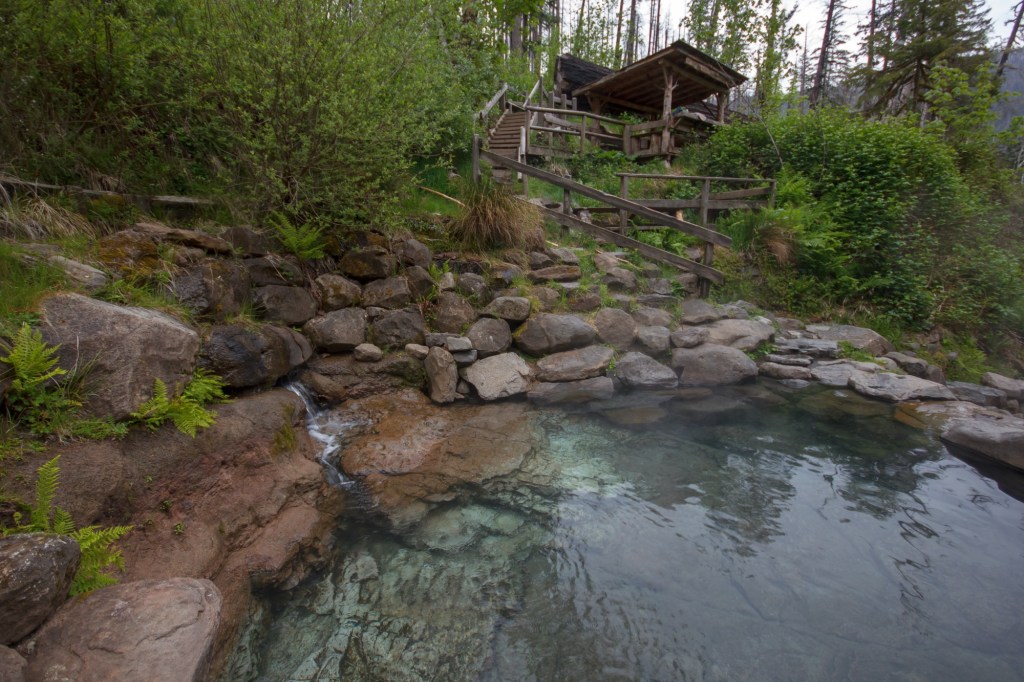
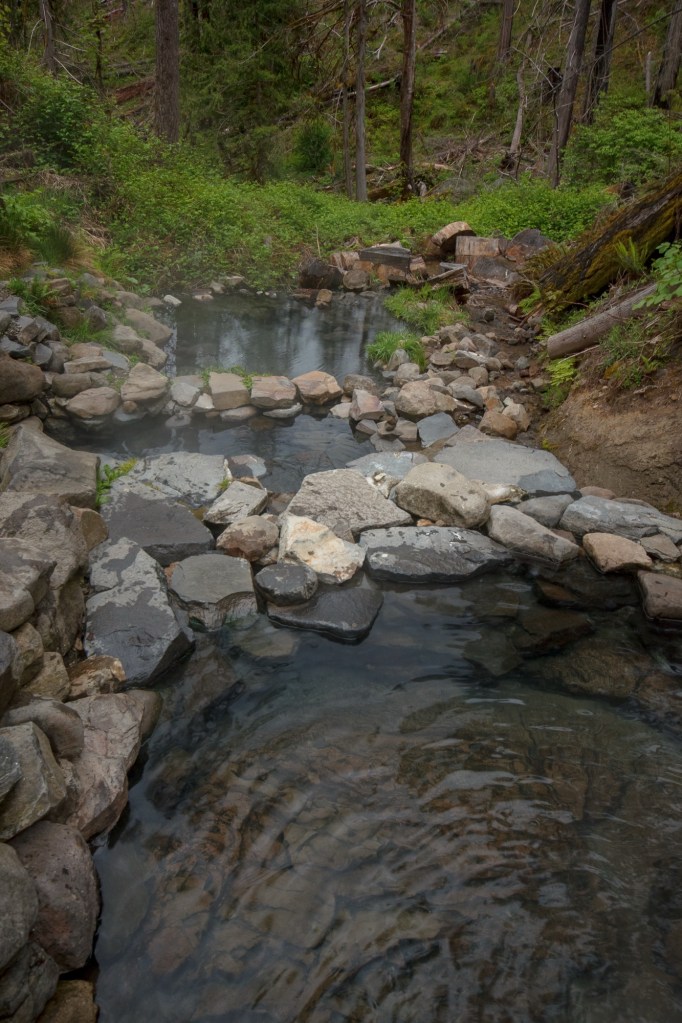
The temperature varies between the pools. The top pool, where the water flows in, is the hottest, often reaching around 112°F (44°C), with the lower pools cooling off gradually to about 85°F (29°C) at the bottom. If you’re new to hot springs, it’s a good idea to test the water before hopping in. What feels perfect to one person might be way too hot for someone else. You’re free to move between pools, and that’s half the fun. The atmosphere is laid back, and people are generally respectful and welcoming.
Wildfire History and Its Impact on the Area
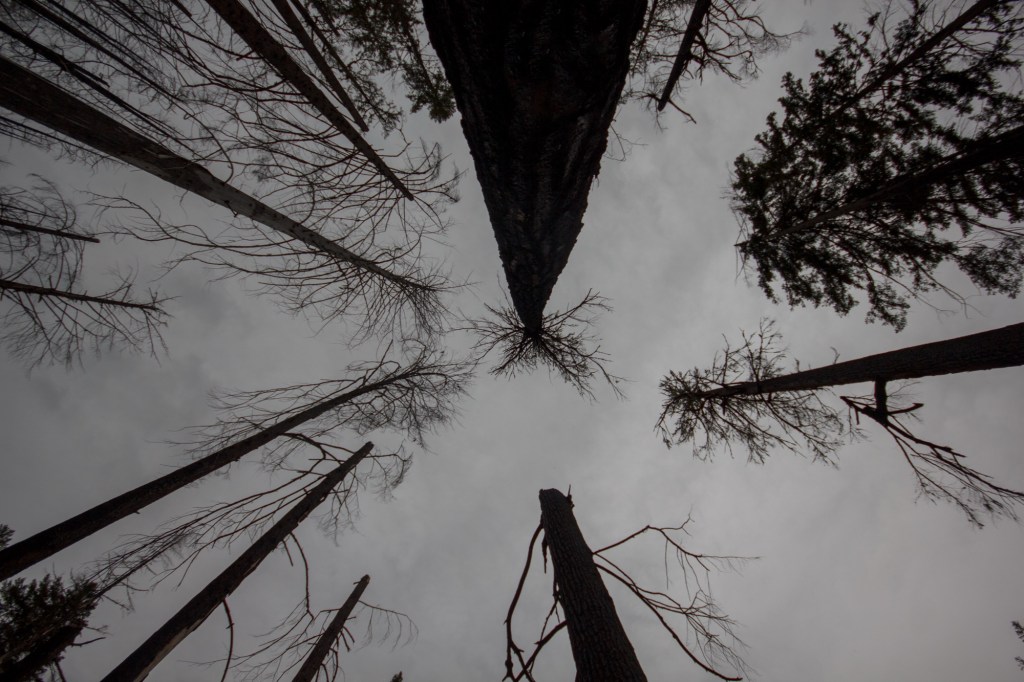
In 2018, Terwilliger (Cougar) Hot Springs was badly affected by the Terwilliger Fire, which scorched thousands of acres in the Willamette National Forest. According to a ranger I spoke with, the fire is believed to have started along the trail to the hot springs. Someone likely tossed a roach into a hollowed stump. The stump then burned slowly, on the inside hidden from view, for several days. By the time a passerby noticed and tried to put it out, it was already too late. The fire quickly spread, causing widespread damage to the forest, forcing the springs to stay closed for over a year.
It’s a sobering reminder of how fragile these environments can be, and how something as small as a cigarette butt can spark a massive forest fire. If you’re visiting Cougar Hot Spring or any natural space, please be extremely mindful of fire risk.
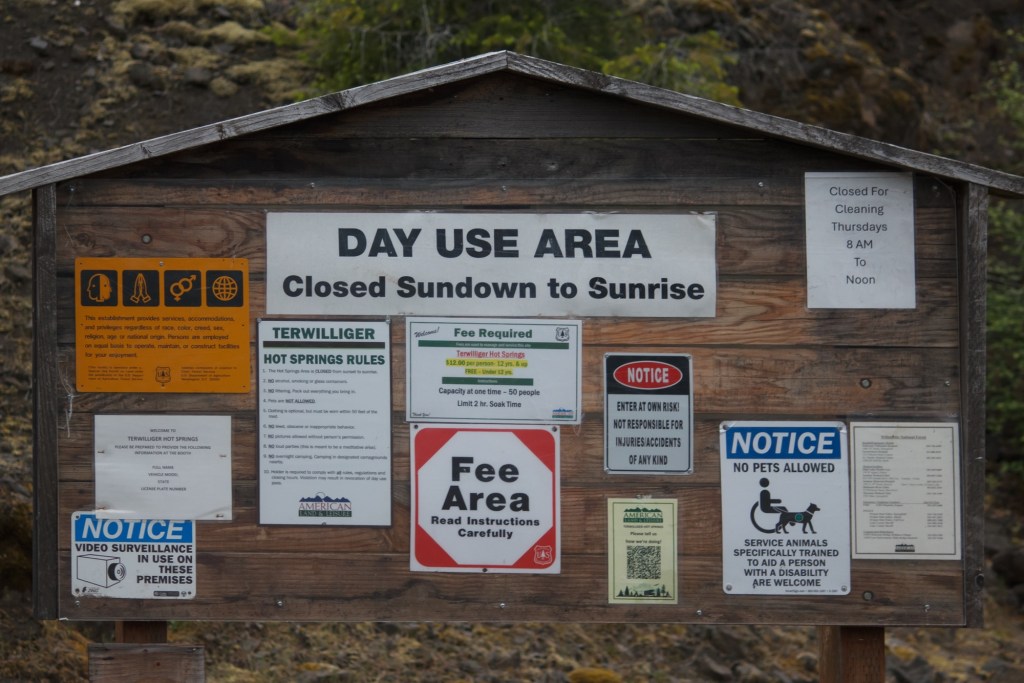
What to Expect During Your Visit
- Clothing is optional here, and it’s totally normal to see a mix of suited and nude bathers. No one really bats an eye either way.
- There’s a $12 day-use fee per person (or a Northwest Forest Pass if you have one). You’ll need cash or the pass as there’s no cards accepted, so come prepared.
- No alcohol, no glass, no camping. These rules are posted clearly, and for good reason. This is a fragile environment, and the Forest Service actively monitors it.
- Day use only Forest Service staff patrol the area and use motion sensors to detect unauthorised entry. Entering after posted hours is considered trespassing and can result in a fine of up to $5000.
- Open year-round, but conditions vary with the seasons. In winter, the road can become icy or closed altogether due to snow or landslides. It’s always a good idea to check the Willamette National Forest website before making the trip.
Facilities and Camping Near Cougar Hot Springs
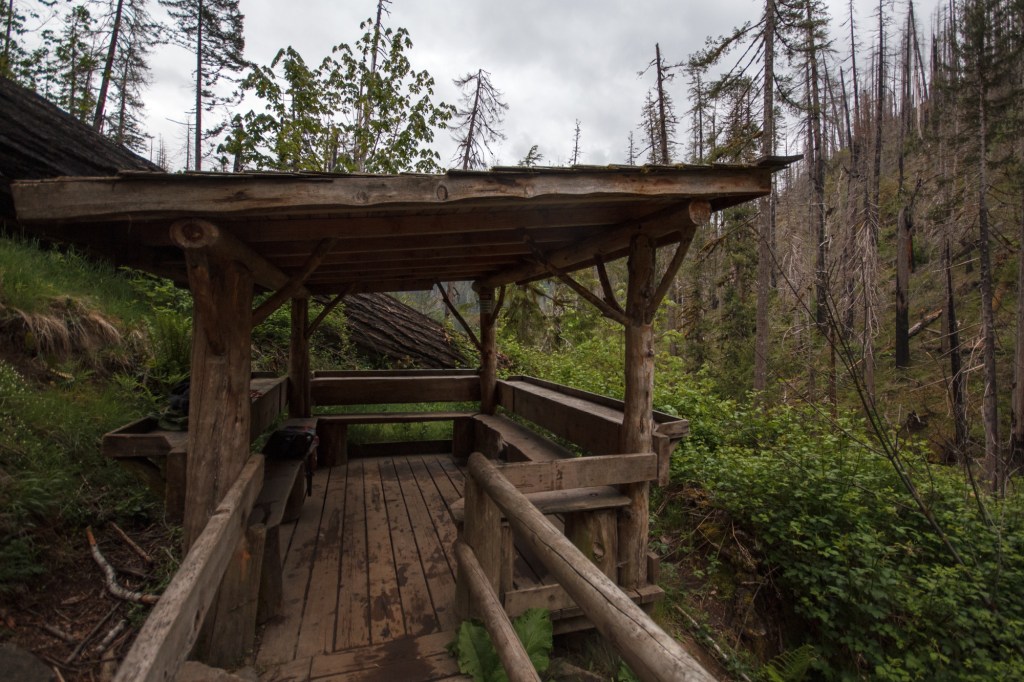
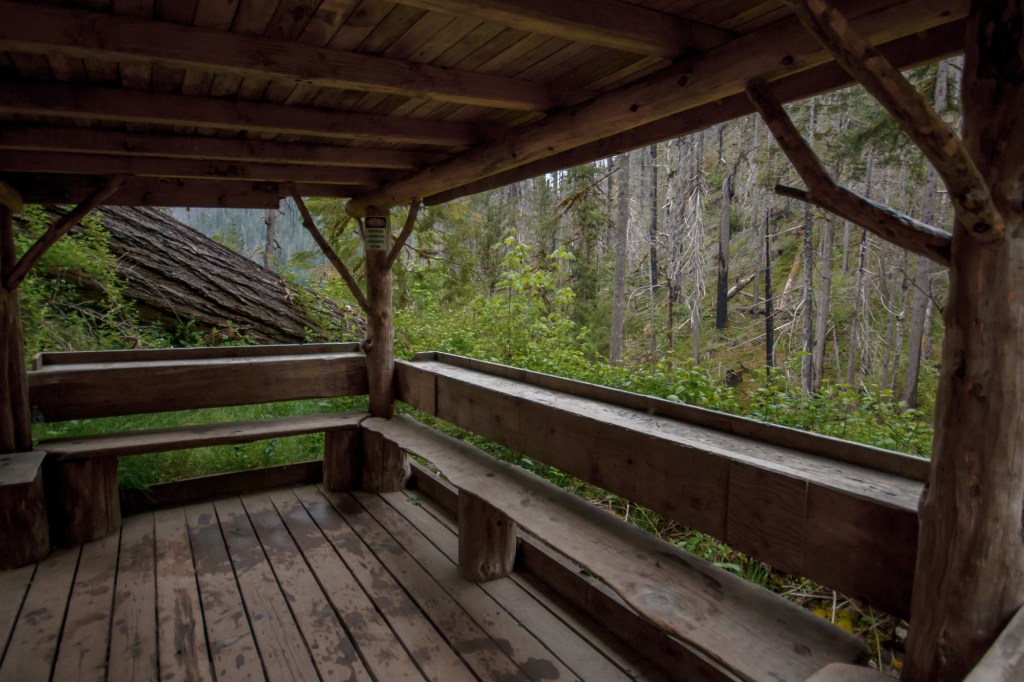
There are limited facilities at Cougar Hot Springs, so come prepared. In the main parking area near the ranger kiosk, you’ll find vault toilets. And a short walk up the hill from the soaking pools, there are additional pit toilets for emergencies. There’s also a bin for rubbish and a simple covered shelter with benches, where most visitors leave their belongings. As always, pack out everything you bring in to help protect this fragile environment.
Overnight camping is not allowed at the hot springs, but there are several developed campgrounds nearby. Cougar Crossing Campground is the closest, just a short drive down Forest Road 19. If you’re after something a little more tucked away, French Pete campground offer a quieter alternative during the warmer months. These sites can fill up quickly in summer, so it’s wise to arrive early or have a backup plan in place.
The Atmosphere and Visitor Experience
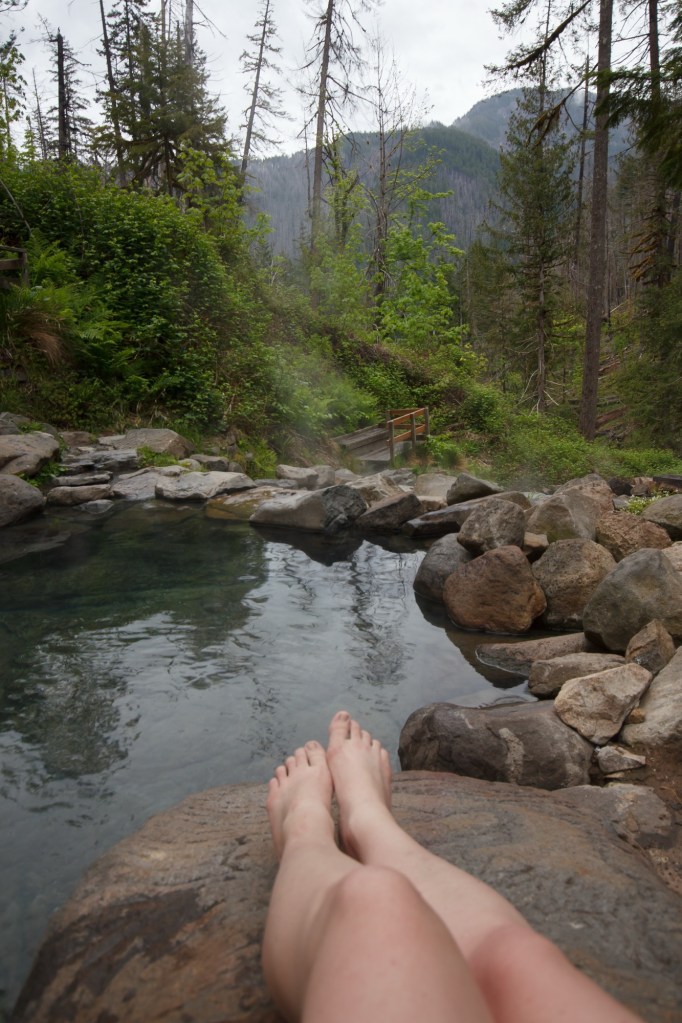
Cougar Hot Springs draws a mix of people… locals looking for a midweek escape, road-tripping couples, backpackers, solo travellers and lots of hippies. The atmosphere is generally quiet and respectful, with an unspoken understanding that everyone’s there to relax. If you’re lucky enough to visit on a weekday morning you might even get a pool to yourself.
My Best Tips for Your Best Soaking Experience
- Stay Hydrated
- Bring plenty of water and sip regularly while soaking. The warm pools cause sweating, so it’s important to replenish fluids every few minutes.
- Timing Your Visit
- Thursday afternoon or Friday is my favourite time to visit the hot springs, since the pools are cleaned every Thursday morning.
- Bring Water-Friendly Footwear
- Wear water sandals if you prefer, especially for walking around the pools and on rocky areas. Personally, I like going barefoot, but I’ve always been part of the no shoes club.
- Enhance Your Relaxation
- Bring your AirPods or earbuds to listen to music or podcasts while you unwind in the pools.
- Try the Cold Plunge
- For a refreshing contrast, take a dip in the nearby stream next to the pools—it’s a perfect cool-down after soaking.
- Respect Privacy
- If you use your phone, be mindful of others. Always ask permission before taking photos if anyone is around.
Final Thoughts and Visiting Tips
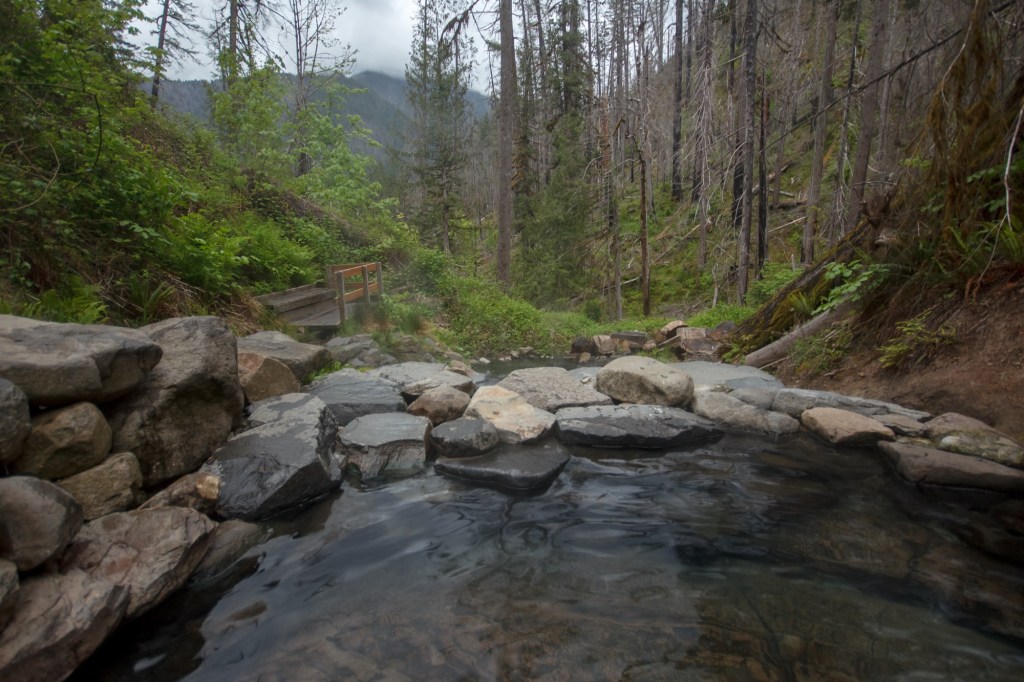
If you’re travelling through Oregon or staying near the McKenzie River, Cougar Hot Springs is absolutely worth the detour. It’s peaceful, beautiful, and deeply restorative, especially after a few days of hiking or driving. Just remember to treat the place with care, follow the rules, and be mindful of the natural environment and other visitors.
Whether you’re soaking in the upper pool with steam swirling around your face or sitting quietly on a boulder listening to the water flow, it’s hard not to feel grateful to be there. It’s one of those places that invites you to slow down and just enjoy the present moment.
 Landscape Lens
Leave a comment